Thursday, June 23, 2011

Must All Devotees Live in the Temple? (MP3 Audio Morning Walk 1975, Hawaii)

                            DOWNLOAD

Follow the instruction. Wherever you remain, it doesn’t matter. You are secure. Follow the instruction. Then you are secure anywhere. I saw my Guru Maharaja not more than ten days in my life, but I followed his instruction. I was a householder, I never lived in the temple. It is practical.


Prabhupada: Hm?
Devotee: Nature’s law?
Prabhupada: Yes, how the nature is working.
Guru-krpa: It’s working, mayadhyaksena prakrtih suyate sa-caracaram.
Prabhupada: Yes.
Guru-krpa: Acting under Krishna’s…
Prabhupada: Under Krsna’s plan. Therefore you cannot violate Krsna’s law. As soon as you violate nature’s law, then you have to be punished. (pause)
Guru-krpa: Bhagavad-gita, that prakrteh kriyamanani…
Prabhupada: gunaih karmani sarvasah. Yes, and prakrti is working under the direction of Krsna. That means, nature’s law means Krsna’s law or Krsna’s plan. So what is the Krsna’s plan? What Krsna wants?

Guru-krpa: Krsna wants every living entity to come back to home, back to Godhead.
Prabhupada: Thank you. This is the plan. If this plan is not executed, then there is suffering. So this human life is given to the living entity for understanding this plan and do the needful. If they do not understand, then they are punished. (break)
Guru-krpa: …today is that because the people have never been given any information what Krsna’s plan is, either they’re too old or too… They’re attached. They can’t understand anything. That’s the majority of the people. Once they get past thirty years old, it’s very difficult for them to accept something.
Prabhupada: No, that is not. Thirty, forty, fifty or one year, that doesn’t matter. One can understand if he wants to understand. Ahaituky apratihata. It is not limited by any age. Otherwise how Prahlada Maharaja was great devotee, Dhruva Maharaja was great devotee?
Yasodanandana: I think he just wants to mention that it is more difficult for people who are elderly to understand, those who are more set up in their ways.
Prabhupada: Yes, yes. That is the difficulty. They are trained up in such a way that it’s very difficult to forget what they have learned. Therefore Prahlada Maharaja says, kaumara acaret prajnah, from the very beginning of life one should learn this art of understanding Krsna and Krsna’s plan.
Devotee (1): Srila Prabhupada, usually on sankirtana I avoid old people because they just don’t understand, and it’s very difficult to approach them.
Prabhupada: Yes, yes, yes. Old people should be instructed to forget what they have learned. He sadhavah sakalam eva vihaya durad caitanya-candra-carane kurutanuragam. This is the formula of preaching. Prabodhananda Sarasvati, he is begging to the people, dante nidhaya trnakam padayor nipatya kaku-satam krtva caham bravimi: “Taking a straw in my mouth, with folded hands and flattering you hundred times, I am submitting one request.” “What is that?” This is the process of approaching these rascals, old fools who have learned something and does not like to forget. So he says, he sadhavah: “Oh, you are such a nice learned scholar-devotee, so my request is that whatever you have learned, please forget.”Sakalam eva vihaya durat: “Kick them out.” “Then? What shall I do?” Caitanya-candra-carane kurutanuragam: “Please turn your attention to the teachings of Lord Caitanya.” He sadhavah sakalam eva vihaya: “You are very great personality. So my request to you: you forget or kick out whatever you have learned.” That is the first business.
Guru-krpa: It is a very humble approach.
Prabhupada: Yes. Humble approach for giving a slap, (chuckles) that “You forget everything, what you have learned.” First of all, this is the first condition. He sadhavah sakalam eva vihaya durad caitanya-candra-carane kurutanuragam. We can go this way. This is our business. We know they are all rascals, but they are thinking that “We know so many things. We are learned scholars.” So humbly approach them and flatter him that “You are so nice man, such a learned scholar.” Just like a child is flattered, “My dear boy, you are such a nice boy. You take these lozenges and return me the hundred dollar note. Don’t spoil it. You are such a good boy, yes.” This is our… Therefore to approach these rascals we have to learn trnad api sunicena taror api sahisnuna. That is the preaching method. Everyone is puffed up. Even most insignificant man, he is also puffed up: “Oh, I am so rich man, I know everything. I have got so much bank balance. These poor fellows, they cannot earn livelihood; therefore they have become Vaisnavas.” ^ This is their policy. (break) You immediately print 100,000, that“Scientific Basis.”
Ramesvara: Immediately reprint.
Prabhupada: Yes.
Ramesvara: I am planning to do that as soon as I go back to Los Angeles. And Jayatirtha said you want us to send these to the professors.
Prabhupada: Yes.
Ramesvara: Complimentary copies for them to study that another scientist has accepted your teachings.
Prabhupada: He has very nicely slapped Darwin. (chuckles) He is a mental speculator. How is that, the scientists accept a mental speculator’s theory? (pause)
Devotee (2): What is it called?
Prabhupada: Gandharvapur.
Devotee (2): What does it mean?
Prabhupada: Sometimes… Means this is false thing. It appears as a big city. Similarly, this is also. This material world is like that. It is a false cloud only, but we have taken it as fact. Just see, it appears just like big New York City. If you go to the forest, you will find some illusion, that just after that tree there is a big house. Have you experienced that?
Devotee (2): Yes.
Prabhupada: That is called Gandharvapur. So if anyone wants to enter that big city, then what is his position?
Devotee (2): Illusion.
Prabhupada: The same thing: the conditioned soul enters the big city of material world, and he struggles. (pause)
Ramesvara: I have heard there is a philosophy here amongst some of the devotees that if you chant Hare Krsna, you can go back to the spiritual world even if you do not give up your independence.
Prabhupada: What is that?
Ramesvara: Many devotees who have moved outside of the temple are feeling that if they just continue to chant Hare Krsna, they can go back to the spiritual world, but they are not giving up their independence.
Prabhupada: So? What is your philosophy?
Ramesvara: Well, it seems somewhat hypocritical because chanting Hare Krsna means you are praying to Krsna to please be engaged eternally in His service and to become completely dependent on Him. So we try to explain like that. And to follow all the teachings and instructions, attending mangala aratik and morning and evening class.
Prabhupada: So they are doing that or not?
Guru-krpa: No. They are not even following regulative principles.
Prabhupada: Then?
Ramesvara: They think just by chanting, they will go back to the spiritual world. That is enough.
Prabhupada: Then what is the meaning of the ten kinds of offenses? If he is chanting without offense, then it is all right, but if he is committing offenses, it will not be effective. There are ten kinds of offenses. Whether he is strictly offenseless? Then it is all right. If he is offender, then it will not be fruitful. It will be fruitful; it will take long time because first of all you have to become offenseless. Then you will be admitted. (aside:) Don’t come very near. That’s it. So they are committing offenses, so how they can become perfect? He is committing not following the rules and regulation. That means he is thinking that “Whatever I do, it will be adjusted by chanting the name.” Is it not?
Guru-krpa: Yes. That’s one of the offenses.
Ramesvara: That is their philosophy.
Prabhupada: That is their philosophy. That is the greatest offense, namnad balad yasya hi papa-buddhih, that “I can go on committing sinful activity, but by chanting Hare Krsna mantra,it will be adjusted.” That is the greatest offense. So explain to them.
Guru-krpa: So they say, “Then my chanting is useless? So I should stop?” That’s what they say.
Prabhupada: No, not useless. But just like if you kindle fire and at the same time pour water, it will take long time. To kindle fire, make it dry, keep it dry. Then it will be very quickly successful. So you are committing offenses, at the same time chanting, so by chanting effect, you will come to that stage, but it will take time. If you want to be transferred to the spiritual world quickly, just like if you want to ignite the fire very quickly, you must keep it dry. If you simply put on the wet wood, then the fire will not be very powerful. It will be… It will take time. The fire will be blazing fire. Then it will dry. It will take… Better put dry wood to make it successful. This is the process. The effect of chanting Hare Krsna will not go in vain, but it will take time. Namnad balad yasya hi papa-buddhih. Because he is thinking “By the strength of chanting Hare Krsna mantra, I can do anything, all sinful activities, and it will be adjusted,” that is the greatest offense, not only offense, the greatest offense. Namnad balad yasya hi papa-buddhih.
Siddha-svarupa: It is very difficult to put everyone who is living outside of the temple in one category. Some people, they are, many people that I know living outside are following strictly the regulative principles, and they are…
Prabhupada: Huh?
Siddha-svarupa: They are strictly following regulative principles and chanting their rounds and having morning aratik in their homes. And evening also, they are chanting. So instead of fighting, I think we should only try to encourage everybody to chant and follow the regulative principles.
Prabhupada: No, that is… Whether you live in temple or outside temple, the rules and regulation and the process must be followed. Then you are successful. It doesn’t matter that you have to live in the temple. Grhe thako vane thako, ‘ha gauranga’ bo’le dako. Not that everyone has to live in the temple. If he does not agree with other Godbrothers, friends, he can live separately. But he must follow the rules and regulation. That is wanted. But if you live with devotees, it will be automatically done.
Siddha-svarupa: Easy.
Prabhupada: Therefore it is recommended that you live with devotees. But if you cannot agree with the devotees, you have got your own opinion, then you cannot make a new opinion so far the process is concerned. That must be followed. This is not good idea, that “Whatever I do, it is my independence, and I will chant.” So that is good in sense that some day he will come to senses. Otherwise, for the time being, the chant is not very powerful. The fire in wet wood is not powerful. It will create some smoke. Although the fire is there. But if you put dry wood, immediately it will be blazing, and your business will be quickly done. This is intelligence. There are many examples. A patient suffering from disease, a doctor said, “You should do; you should not do.” So if we follow “You should not do,” then it becomes quickly recovered. But if he becomes under the treatment of the doctor at the same time he does all nonsense, then how it can be successful? It will take time. That is stated in theCaitanya-caritamrta. Papi jane aparadha achaya pracura. Papi jane aparadha achaya… Offenseless chanting is the ultimate goal. In the beginning we are not offenseless, but by chanting, chanting, by practice, we gradually become offenseless. But this is necessary, that you should be offenseless.
Devotee (3): Srila Prabhupada, it’s very difficult to control my mind when I chant. It wanders.
Prabhupada: So what is the controlling of mind? You have to chant and hear, that’s all. You have to chant with your tongue, and the sound you hear, that’s all. What is the question of mind?
Ramesvara: Srila Prabhupada, it seems unfortunate that if the devotees cannot live in the temples, then they have to work for some karmi just to support themselves, and then they do not have time to go on the sankirtana party. So it is such mercy to be on the sankirtanaparty. So it seems very unfortunate that they do not have the time.
Prabhupada: No, then they should live in the temple if they want to give service in thesankirtana party.
Ramesvara: We always try to encourage them to come back to the temple.
Prabhupada: Yes. If he does not join the sankirtana party, that does not mean his spiritual life is hampered. He has to follow the rules and regulation. He may not be able to join thesankirtana party, but he must follow the process, rules and regulation. That is wanted. And because he is living outside the temple, therefore he will forget all rules and regulation and do whatever he likes–then it will ruin the whole thing.
Devotee (1): Srila Prabhupada, is it faster if one lives in the temple and goes on thesankirtana party. Is it faster?
Prabhupada: That depends on him. Even in the temple, if his mind is in a different subject matter, then how it will help him?
Bali Mardana: The temple authorities like to preach that anyone who’s living outside the temple is going to hell.
Prabhupada: Generally.
Bali Mardana: But even devotees who are following. They like to preach that.
Prabhupada: No, that is not. That is not. Just like even in ordinary business, if you transact business in the stock association, you get good business. And outside the stock association you don’t get. Because association is there, there are many purchaser and many seller. So if you have to sell, you get immediate purchaser. And if you have to purchase, there is immediate seller. That is… Therefore the stock exchange is there. That is the way, that if we live together in the stock exchange of devotional service, then you can help me; I can help you. So our business will go on nicely. And outside the market, you can live three hundred miles away from the stock exchange. You will not get so many business. Like that.
Devotee (2): You’ll miss the opportunities.
Prabhupada: Yes. Therefore it is helpful. If you want to do business, you must take the first opportunity, the greatest opportunity, do your business. That is intelligence. And if we think, “All right, I shall do slowly. In seven hundred lives I shall become perfect,” that is another thing.
Bali Mardana: It is riskier to stay outside.
Prabhupada: Oh, yes. Otherwise why you are opening so many centers and making arrangement that “We shall provide you with shelter, with food. These are the facilities. You live here, do whatever is your capacity. Don’t sleep, but work.” This is our teaching. Satam prasangat, this is also, and Rupa Gosvami says, sato vrtteh sadhu-sange sadbhir bhaktih prasidhyati: “If you live with the association of sadhu, devotee, then it will be quickly fruitful.” And if you live with these ordinary men, then whatever you have got will be finished very soon. There is another verse. It is said there that it is preferred to live within the cage surrounded by fire than to live with the nondevotees. It is preferred.
Bali Mardana: Or with those who are too much attached to women also.
Prabhupada: Yes. Nondevotee means too much attached to woman. That is the plain fact.
Yasodanandana: Also one time in Bombay you told this verse from Caitanya-caritamrta, sadhu-sanga, sadhu-sanga…
Prabhupada: Sarva-sastre kaya, lava-matra sadhu-sange sarva-siddhi haya. For me, personally, I had the opportunity to talk with my spiritual master not more than ten times in my whole life, not more. It may be less than that. But I tried to follow his instruction, that’s all, although I was a grhastha.
Bali Mardana: You are a much better student than us.
Prabhupada: So this is the process. That is the… You sing every day. Guru-mukha-padma-vakya, cittete koriya aikya. That is the process. Wherever you live, if you follow strictly the instruction of guru, then you remain perfect. But if we create, concoct ideas against the instruction of guru, then we are doomed, hell. Yasya prasadad bhagavat-prasado yasyaprasadan na gatih kuto ‘pi. There is no more shelter, finished. Yasya prasadat. If guru thinks that “This person, I wanted to take him back to home, back to Godhead. Now he is going against me. He is not following,” aprasadat, he is displeased, then everything is finished.
Bali Mardana: Vaisnavaparadha.
Prabhupada: Yes.
Devotee (1): Srila Prabhupada, where does someone derive his authority…
Prabhupada: The guru is authority.
Devotee (1): No, I know, but for his actions other than just following the four regulative principles and chanting sixteen rounds. He does so many other things during the day. Where does he derive his authority if he’s not, let’s say, living in the temple?
Prabhupada: I do not follow. The authority is guru. You have accepted.
Bali Mardana: For everything.
Jayatirtha: Say I have some outside job, I’m living outside, but I’m not giving 50% of my income. So then that work that I’m doing, is it actually under the authority of the guru?
Prabhupada: Then you are not following the instruction of guru. That is plain fact.
Jayatirtha: So that means that whole activity during the day, working, that means I am not following the instruction of the guru. It’s unauthorized activity.
Prabhupada: Yes. If you don’t follow the instruction of guru, then you are fallen down immediately. That is the way. Otherwise why you sing, yasya prasadad bhagavat-prasado. It is my duty to satisfy guru. Otherwise I am nowhere. So if you prefer to be nowhere, then you disobey as you like. But if you want to be steady in your position, then you have to follow strictly the instruction of guru.
Devotee (1): We can understand all of your instructions simply by reading your books.
Prabhupada: Yes. Anyway, follow the instruction. That is required. Follow the instruction. Wherever you remain, it doesn’t matter. You are secure. Follow the instruction. Then you are secure anywhere. It doesn’t matter. Just like I told you that I saw my Guru Maharaja not more than ten days in my life, but I followed his instruction. I was a grhastha, I never lived with the Matha, in the temple. It is practical. So many Godbrothers recommended that “He should be in charge in this Bombay temple, this, that, that…” Guru Maharaja said, “Yes, better he lives outside. That is good, and he will do what is needed in due course of time.”
Devotees: Jaya! Haribol!
Prabhupada: He said like that. I could not understand at that time what does he expect. Of course, I knew that he wanted me to preach.
Yasodanandana: I think you have done this in grand style.
Devotees: Jaya, Prabhupada! Haribol!
Prabhupada: Yes, done grand style because I strictly follow the instruction of my Guru Maharaja, that’s all. Otherwise I have no strength. I have not played any magic. Did I? Any gold manufacturing? (laughter) Still, I have got better disciples than the gold-manufacturing guru.
Yasodanandana: Before you came, many gurus came, but they did not make any pure devotee of Krsna.
Prabhupada: How they can? He is not pure devotee of Krsna. How he can do? Krsna-sakti vina nahe nama pracara: “Without being empowered by Krsna nobody can turn a person to become devotee of Krsna.” It is not… Artificially, you cannot make. He may make show of gold manufacturing, but he cannot make a devotee of Krsna. That is not possible.
Jayatirtha: So the purpose of having the Society is to show the devotees how they can always be twenty-four hours engaged according to your instruction.
Prabhupada: Yes, that is helping one another. If I am deficient, by seeing your example I shall correct myself. This is the idea, not that a fool’s paradise: all fools and join together. Not like that. There should be ideal life, at least the leaders, the president, the GBC. They will show the example, and they will follow. Then it is beneficial. And all of them are fools? Then it is fool’s paradise. At least, in the blind association, at least if one man has got eyes, then he can lead all the blind men. But if all of them are blind, then it is fool’s paradise. So somehow or other, we have got now a position. People likes us. So we should not spoil by personal sense gratification. That is my request. If we can maintain this institution rigidly according to the order, then many people will be benefited. By seeing our behavior, by character, they will become. Apani acari prabhu jiveri siksaya. The leader should be ideal.
Devotee (1): We should dedicate our lives to preaching this message of Lord Caitanya.
Prabhupada: Yes, preaching, preaching, you will become perfect preacher. Preach only what you have heard from Krsna and guru, that’s all. Don’t add and subtract. Then you are secure. And if you add some concoction just like somebody says that “I may do whatever I like independently. If I chant, then everything is all right,” this is nonsense addition. It is not the fact. That is the danger. Some inexperienced man, he introduces some concoction. Sometimes they say, “Prabhupada said it.” More misleading. Yes. (end)
[750203mw.haw] Morning Walk February 3, 1975, Hawaii
His Divine Grace A.C. Bhaktivedanta Swami Prabhupada

Back to Godhead No. 32 (1970)


London Town Hall Lecture–Srila Prabhupada, London Airport Press Conference–Srila Prabhupada, Prasadam: Food for the Body, Food for the Soul and Food for God–Kirtanananda Swami, The Avataras of God–Nayana Abhiram das Brahmacari, Sri Dham Mayapur The Most Holy Abode–Acutananda das Brahmacary, Lust and Love–Subal das Adhikari, Los Angeles Bliss–Photos by Gargamuni das Adhikari, Love of God, Krsna Lila The Divine Forms and Pastimes–Hayagriva das Adhikari, Isavasya: God-Centered Society–Rupanuga das Adhikari, The Transcendental

                                                   Click On Page to View Larger Version


Back to Godhead No. 32 (1970)

Wednesday, June 22, 2011

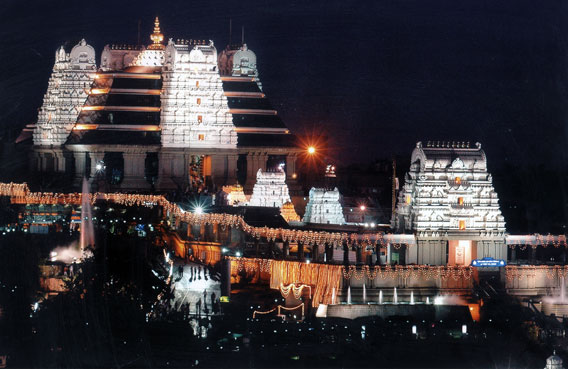
ISKCON-Bangalore

SC restrains ISKCON-Mumbai

The Honourable Supreme Court has restrained ISKCON Mumbai society from interfering with the day to day management of the ISKCON-Bangalore. It also instructed both the parties to maintain status quo. The court further said that the ISKCON-Bangalore society office bearers should continue with the day to day affairs and the supervisory committee of ISKCON Mumbai has been restrained from interfering in any way or barging in. The court also ordered that the plaintiff society (ISKCON-Bangalore) will manage the day to day affairs and that ISKCON Mumbai should not interfere. The divisional bench of Honorable Justice Sri B.S.Chauhan and Justice Sri Swatantra Kumar were giving an order on the special leave petition filed by the ISKCON-Bangalore Society. The divisional bench heard arguments presented by Sri U. Lalith, the senior counsel for ISKCON-Bangalore. The apex court however did not stay the High court order.

The counsel for ISKCON-Bangalore explained that the difference between ISKCON Mumbai and ISKCON-Bangalore pertains to the issue of spiritual succession of the Acharya post the physical departure of its founder Srila Prabhupada.

The honorable judges asked for the registration copies of both the societies and listed the matter for further hearing after the vacation.

Temple History

In September 1987, ISKCON Bangalore was operating from a rented house in the city with a handful of devotees. Under the leadership of the Temple President, Sri Madhu Pandit Dasa, ISKCON Bangalore applied for a 7-acre hillock from the Bangalore Development Authority (BDA). The BDA had described it as “karaab land” (waste land) as it was a huge piece of monolithic rock and could not be converted into sites. The BDA sanctioned the land at a cost of Rs. 11 lakhs to be paid in 90 days. With practically no resources in hand, the team of devotees managed to collect the sum partly with the help of some donors and partly through loan.

The whole construction was carried out by the ISKCON Construction Department. Between 1990 and 1997 a total of 10 million man-hours were put by 600 skilled craftsmen, 32,000 cubic meters of stone, 131,250 tons of cement and 1,900 tons of steel were used.

My Duty as Krishna Devotee

Krishna reveals the secret of becoming closer to Him, in the Bhagavad-Gita (18.69-70). He says

ya idam paramam guhyam mad-bhaktesv abhidhasyati

bhaktim mayi param krtva mam evaisyaty asamsayam

For one who explains this supreme secret (of Bhagavad-Gita) to the devotees, pure devotional service is guaranteed, and at the end he will come back to Me.

na ca tasman manusyeshu kascin me priya-krttamah

bhavita na ca me tasmad anyah priyataro bhuvi

There is no servant in this world more dear to Me than he, nor will there ever be one more dear.

The secret of becoming dear to Krishna is to spread the message of Bhagavad-Gita in which Lord implores us to think of Him, worship Him and surrender to Him. The temples of Radha Krishna established by and on the order of Srila Prabhupada are like the oasis in the desert which gives all of us the opportunity to practice the principles of Bhagavad-Gita. If one brings others closer to Krishna temples of ISKCON one will help in bringing conditioned souls nearer to Krishna. Thus any such endeavor will make one very dear to Krishna.

ISKCON Bangalore’s Radha Krishna temple on Hare Krishna Hill, since its inception in 1997 has been attracting thousands of devotees and has been inspiring them to become devotees of Krishna. It has indeed become the oasis that Srila Prabhupada referred to. Many devotees have found transcendental peace on having darshana of the deities of Sri Radha Krishna Chandra, Sri Krishna Balarama, Sri Nitai Gauranga, Sri Srinivasa Govinda and Sri Prahlada Narasimha.

The modern scientific age thro’ internet has shrunk the whole world into one Global Village, or shall we say it has made the whole world available to us on our desktop. Internet has made the world smaller and virtually without boundaries. Over 1971 million people are using the internet, which accounts for about 28% (statistics as on Sept 2010) of the total world population. So it is imperative that this wonderful innovation be put to right use by using it to bring people closer to Krishna.

Wishing to use this opportunity ISKCON Bangalore has been striving to make its online presence as enlivening as the offline presence. We have tried to use the latest technology to bring their Lordships Sri Radha Krishna to the desktops of as many users of internet as possible. In this effort you all can render valuable service by bringing your friends on the net in touch with Them, and become dearer to Krishna. By taking Lordships Sri Radha Krishna to the desktops of others you will open the doors of liberation for you and your friends. All that you have to do is to use the social media tools like face book, twitter, orkut etc to spread the various elements of online presence of ISKCON Bangalore.

Temple Tales Come Alive


Amar Chitra Katha are launching a series on the temples of India, reports Sohini Chakravorty


The magic of Amar Chitra Katha never fades away. With its colourful illustrations drawn from Indian mythology and folk tales, this comic book series has become an integral part of childhood and has a growing reader base to become a favourite among both children and parents. Evolving over the years, Amar Chitra Katha is now ready with their new series on the temples of India, starting with Tirupati.


“The book will focus of the mythology of the temple. We are not focusing on the history of the temple or its architecture but on the various stories behind the temple and how it was built,” explains Reena Puri, editor of Amar Chitra Katha. Next in the series is the Vaishno Devi temple.


She adds that, “The stories are narrated in a simple format so that children can understand it. We have not gone into much detail in describing the temple.” After multiple visits to the temple and its vicinity by the artist and writer and two months of scouting at the location for mythologies, they finalised the content and illustrations.


“We are experimenting a lot with our designs, making it more contemporary. We have not drifted much from our old style but drawings are different as young artists are adding their touch along with our traditional styles. It is a merge between traditional and contemporary,” says the editor.


Also in the offing is a series on the historical places in India. The editor Reena Puri explains that so far Amar Chitra Katha focused only on few cities but with the new series, they will highlight the various mythological stories associated with the popular historical places in the country.


“For example Hampi is also identified as Kishkindha and we have narrated the mythology of the place,” she explains.


Biographies of contemporary historical figures and books with short stories are also on the anvil.


While the Amar Chitra Katha Media is keeping the interest alive with several new series, the editor maintains that the online media is not a threat.


“We have a website where some our comic series can be read online. But the reading habit has not decreased. Parents are still encouraging their children to buy books and read,” she explains. She states that the parents are nostalgic about their Amar Chitra Katha books and it is their loyalty that is making their children pick up the comic books.


“There are families who have kept the books as heirlooms. We have a large number of loyal readers,” she says.

Tuesday, June 21, 2011

Immortal Love Legends

Immortal Love Legends
Romantic Tales from Hindu Literature


Perhaps no other faith glorifies the idea of love between the sexes as Hinduism. This is evident from the amazing variety of mythical love stories that abounds Sanskrit literature, which is undoubtedly one of the richest treasure hoards of exciting love tales.

The tale-within-a-tale-within-a-tale format of the great epics of Mahabharata and Ramayana, lodges a lot of love legends. Then there are the charming stories of Hindu gods and goddesses in love and the well-known works like Kalidasa's Meghadutam and Abhijnanashakuntalam and Surdasa's lyrical rendition of the legends of Radha, Krishna and the gopis of Vraj. Set in a land of great natural beauty, where the lord of love picks his victims with consummate ease, these stories celebrate the myriad aspects of the many-splendored emotion called love.

The Lord of Love

It is relevant, here, to know about Kamadeva, the Hindu god of carnal love, who is said to arouse physical desire. Born out of the heart of Creator Lord Brahma, Kamadeva is depicted as a youthful being with a greenish or reddish complexion, decked with ornaments and flowers, armed with a bow of sugarcane, strung with a line of honeybees and floral arrowheads. His consorts are the beautiful Rati and Priti, his vehicle is a parrot, his chief ally is Vasanta, the god of spring and he is accompanied by a band of dancers and performers - Apsaras, Gandharvas and Kinnaras.

The Kamadeva Legend

According to a legend Kamadeva met his end at the hands of Lord Shiva, who incinerated him in the flames of his third eye. Kamadeva had inadvertently wounded the meditating Lord Shiva with one of his arrows of love, which resulted him to fall in love with Parvati, his consort. From then on he is thought to be bodiless; however, Kamadeva has several reincarnations, including Pradyumna, the son of Lord Krishna.

Revisiting the Love Stories

Classical love legends from Hindu mythology and folklore of India are both passionate and sensuous in content, and never fail to appeal to the romantic in us. These fables fuel our imagination, engage our emotions, sense and sensibility, and above all, entertain us.

The Love Tale of Shakuntala & Dushyant

The Love Tale of Shakuntala & Dushyant
Romantic Stories from Hindu Literature


The legend of the exquisitely beautiful Shakuntala and the mighty king Dushyant is a thrilling love story from the epic Mahabharata, which the great ancient poet Kalidasa retold in his immortal play Abhijnanashakuntalam.

While on a hunting trip, King Dushyant of the Puru dynasty meets the hermit-girl Shakuntala. They fall in love with each other and, in the absence of her father, Shakuntala weds the king in a ceremony of 'Ghandharva', a form of marriage by mutual consent with mother Nature as the witness. When the time comes for Dushyant to return to his palace, he promises to send an envoy to escort her to his castle. As a symbolic gesture he gives her a signet ring.

One day when the hotheaded hermit Durvasa stops at her hut for hospitality, Shakuntala, lost in her love thoughts, fails to hear the guest's calls. The temperamental sage turns back and curses her: "He whose thoughts have engrossed you would not remember you anymore." On the plea of her companions, the enraged sage relents and adds a condition to his curse-statement: "He can only recall you upon producing some significant souvenir."

Days roll by and nobody from the palace comes to fetch her. Her father sends her to the royal court for their reunion, as she was pregnant with Dushyant's child. En route, Shakuntala's signet-ring accidentally drops into the river and gets lost.

When Shakuntala presents herself before the king, Dushyant, under the spell of the curse, fails to acknowledge her as his wife. Heart-broken, she pleads to the gods to vanquish her from the face of earth. Her wish is granted. The spell is broken when a fisherman finds the signet ring in the guts of a fish - the same ring that Shakuntala had lost on her way to the court. The king suffers from an intense feeling of guilt and injustice. Shakuntala forgives Dushyant and they are reunited happily. She gives birth to a male child. He is called Bharat, after whom India gets her name.

The Story of Savitri & Satyavan

The Story of Savitri & Satyavan
Romantic Stories from Hindu Literature


Savitri was the beautiful daughter of a wise and powerful king. The fame of Savitri's beauty spread far and wide, but she refused to marry, saying that she would herself go out in the world and find a husband for herself. So the king chose the best warriors to protect her, and the princess wandered throughout the country searching for a prince of her choice.

One day she reached a dense forest, where dwelt a king who had lost his kingdom and fallen into his bad days. Old and blind he lived in a small hut with his wife and son. The son, who was a handsome young prince, was the sole comfort of his parents. He chopped wood and sold it in the countryside, and bought food for his parents, and they lived in love and happiness. Savitri was strongly drawn towards them, and she knew her search had come to an end. Savitri fell in love with the young prince, who was called Satyavan, and was known for his legendary generosity.

Hearing that Savitri has chosen a penniless prince, her father was heavily downcast. But Savitri was hell-bent on marrying Satyavan. The king consented, but a saint informed him that a fatal curse laid upon the young prince: He is doomed to die within a year. The king told her daughter about the curse and asked her to choose someone else. But Savitri refused, and stood firm in her determination to marry the same prince. The king finally agreed with a heavy heart.

The wedding of Savitri and Satyavan took place with a lot of fanfare, and the couple went back to the forest hut. For a whole year they lived happily. On the last day of the year, Savitri rose early and when Satyavan picked up his axe to go into the forest to chop wood she requested him to take her along, and the two went into the jungle.

Under a tall tree, he made a seat of soft green leaves and plucked flowers for her to weave into a garland while he chopped wood. Towards noon Satyavan felt a little tired, and after a while he came and lay down resting his head in Savitri's lap. Suddenly the whole forest grew dark, and soon Savitri saw a tall figure standing before her. It was Yama, the God of Death. "I have come to take your husband," said Yama, and looked down at Satyavan, as his soul left his body.

When Yama was about to leave, Savitri ran after him, and pleaded Yama to take her too along with him to the land of the dead or give back the life of Satyavan. Yama replied, "Your time has not yet come, child. Go back to your home." But Yama was ready to grant her any boon, except Satyavan's life. Savitri asked, "Let me have wonderful sons." "So be it", replied Yama. Then Savitri said, "But how can I have sons without my husband, Satyavan? Therefore I beg of you to give back his life." Yama had to give in! Satyavan's body came back to life. He slowly woke up from the stupor and the two gladly walked back to their hut.

So strong was the single-minded love and determination of Savitri that she chose a noble young man for her husband, knowing that he had only a year to live, married him with all confidence. Even the God of Death had to relent, and bowed to her love and devotion.

The Radha-Krishna Romance

The Radha-Krishna Romance
Romantic Stories from Hindu Literature

The Radha-Krishna amour is a love legend of all times. It's indeed hard to miss the many legends and paintings illustrating Krishna's love affairs, of which the Radha-Krishna affair is the most memorable. Krishna's relationship with Radha, his favorite among the 'gopis' (cow-herding maidens), has served as a model for male and female love in a variety of art forms, and since the sixteenth century appears prominently as a motif in North Indian paintings. The allegorical love of Radha has found expression in some great Bengali poetical works of Govinda Das, Chaitanya Mahaprabhu, and Jayadeva the author of Geet Govinda.

Krishna's youthful dalliances with the 'gopis' are interpreted as symbolic of the loving interplay between God and the human soul. Radha's utterly rapturous love for Krishna and their relationship is often interpreted as the quest for union with the divine. This kind of love is of the highest form of devotion in Vaishnavism, and is symbolically represented as the bond between the wife and husband or beloved and lover.

Radha, daughter of Vrishabhanu, was the mistress of Krishna during that period of his life when he lived among the cowherds of Vrindavan. Since childhood they were close to each other - they played, they danced, they fought, they grew up together and wanted to be together forever, but the world pulled them apart. He departed to safeguard the virtues of truth, and she waited for him. He vanquished his enemies, became the king, and came to be worshipped as a lord of the universe. She waited for him. He married Rukmini and Satyabhama, raised a family, fought the great war of Ayodhya, and she still waited. So great was Radha's love for Krishna that even today her name is uttered whenever Krishna is refered to, and Krishna worship is though to be incomplete without the deification of Radha.

One day the two most talked about lovers come together for a final single meeting. Suradasa in his Radha-Krishna lyrics relates the various amorous delights of the union of Radha and Krishna in this ceremonious 'Gandharva' form of their wedding in front of five hundred and sixty million people of Vraj and all the gods and goddesses of heaven. The sage Vyasa refers to this as the 'Rasa'. Age after age, this evergreen love theme has engrossed poets, painters, musicians and all Krishna devotees alike.

Monday, June 20, 2011

Why We Dread Shani

Why do most Hindus fear Shani Dev? Shani is one of the popular deities that the Hindus pray to ward off evil and remove obstacles. They are under fear of evil from his planet - Saturn. Anyone born under his influence is believed to at risk. Even the day named after him, Shanivara or Saturday, is considered inauspicious.

Shani is represented as having a dark complexion and is said to be the son of Surya, the sun god, and Chaya, the servant whom his wife Swarna surrogated. He is the brother of Yama, the god of death and is believed by many to be an avatar of Shiva.

According to myths, Shani oversees the "dungeons of the human heart and the dangers that lurks there." Stories about his evil influence abound. He is said to have chopped off Ganesha's head...

Protest Against Ganesha "Demon" Statue in Idaho Loses Steam

Protesters against the public display of Lord Ganesha sculpture in downtown Coeur d'Alene in Idaho on Friday, June 10, 2011 were outnumbered by over six times by counter-demonstrators.

Reuters reported on Friday about a group of self-described constitutionalists protesting the northern Idaho city's dedication of the sculpture of the Hindu deity at Sherman Avenue. This piece of art by Spokane, Washington artist Rick Davis is a bluish metal sculpture depicting Ganesha.

The local Kootenai County Constitution Party website called Ganesha "a Hindu demon," urging Christians to protest against the "abomination" on the street of Coeur d'Alene, and named the local arts officials a "godless group," for installing the statue of a Hindu deity. The local chairman Daniel Brannan told the media: "It is representative of a false god, of a particular religion other than the one on which our country is so solidly founded." This encouraged a protest and a resultant counter-protest by people who supported the move.

News reports suggest that both groups carried handmade signs in these peaceful demonstrations on the opposite corners of Sherman/Sixth at the dedication ceremony. One sign opposing the Ganesha sculpture read "The veneration of the idols is the worship of demons". One of the signs carried by counter-demonstrators supporting the sculpture said "Go away all intolerant hate mongers. We love art."

Davis' "Ganesha" on East Sherman Avenue and South 6th Street is part of 15 sculptures of "ART Currents--Coeur d'Alene Public Art On-Loan 2011-2012 Program". Spread across the downtown area, a variety of art pieces on loan from local and national artists are on display for one year and for sale. Besides "Ganesha," which is priced at $35,000 and the third most expensive, Davis' "St. Francis of Assisi" and "Great Blue Heron" are also on display.

Coeur d'Alene, founded in 1878 and known as "Lake City," is home to the second largest metropolitan area in Idaho. The vast majority of tolerant residents of the city found the protest ironical and against religious freedom.

Holy Ganga Dashami

The River Ganges or Ganga is perhaps the holiest river in any religion. Though equally polluted, it bears immense significance to the Hindus. Besides being a sacred river, Ganga is also worshiped as a deity in Hinduism and respectfully referred to as 'Gangaji' or 'Ganga Maiya' (Mother Ganga).
                                                                                                                                                                         
Hindus believe that rituals performed by the river Ganga multiply in their blessedness. The land over which Ganga flows is regarded as hallowed ground. It is believed that those who die around this river reach the heavenly abode with all their sins washed away.

Every summer, the Ganga Dusshera or Ganga Dashami festival (June 11, 2011) venerates the auspicious occasion of the descent of the sacred river on earth from heaven. On this day, a dip in the holy river invoking the Goddess is said to cleanse all sins. A devotee worships by lighting incense and lamp, and offers sandalwood, flowers, and milk. Fishes and other aquatic animals are fed flour balls.

Ratha Yatra 2011 in Europe : When & Where

The annual Hindu Chariot Festival or Ratha Yatra season begins this week in Europe. A series of religious processions exhibiting the cultural richness of Hinduism have been planned across the streets of major cities in the continent between June and September 2011.

Ratha Yatra 2011 Calendar: When and Where

June 4: Heidelberg
June 12: London
June 12: Berlin
June 18: Antwerp
June 19: Crawley
July 3: Paris, France
July 24: Birmingham, UK
July 31: Leicester, UK
August 6: Cologne, Germany
August 14: Amsterdam, The Netherlands
September 3: Leipzig
September 10: Brighton
September 17: Cardiff

The International Society for Krishna Consciousness (ISKCON) sponsors these parades featuring huge decorated chariot with colorful canopies carrying images of the Hindu deities Lord Jagannath, a form of Krishna, his elder brother Balabhadra, and younger sister Subhadra, wearing silk clothes and decorated with flowers. These divinely decorated carriages are pulled by devotees as the sound of Hindu devotional music, backed by double-headed mridanga drums and kartala hand cymbals fill the atmosphere. A multitude of dancing devotees dressed in traditional Hindu attire accompany the procession. Free vegetarian feast is served to the participants at the launch of the parade, giving a taste of India.

Ratha Yatra is said to be the oldest known parade in the world and it is believed that pullers of this Lord Jagannatha's chariot receive immense spiritual benefit. Popularized outside India by ISKCON founder A.C. Bhaktivedanta Swami Prabhupada, this annual parade festival has reportedly been held annually in over 50 major cities in USA, Canada, Europe, etc., since 1960s.

The ancient Hindu scripture Katha Upanishad talks about the concept of chariot, where soul is the deity, body is the chariot, and intellect the charioteer. Another holy text, the Skanda Purana glorifies Ratha Yatra's sanctity. The grand Ratha Yatra of Puri falls on July 3, 2011.


Every year in mid-summer, Lord Jagannath, with his elder brother Balabhadra and sister Subhadra, goes on vacation, travelling on grand chariots, from his temple in Puri, to his garden palace in the countryside. This belief of the Hindus has given rise to one of the biggest religious festivals in India — the Rath Yatra or the Chariot Festival. This is also the etymological origin of the English word 'Juggernaut'.

Jagannath, believed to be an avatar of Lord Vishnu, is the Lord of Puri — the coastal town of Orissa in eastern India. Rath Yatra is of great significance to the Hindus, and especially to the people of Orissa. It is during this time that the three deities of Jagannath, Balabhadra and Subhadra are taken out in a grand procession in specially made gigantic temple-like chariots called raths, which are pulled by thousands of devotees.

The 10 Yamas & Niyamas of Hinduism

What does living virtuously mean to Hindus? It is following the natural and essential guidelines of dharma and the 10 yamas and 10 niyamas - ancient scriptural injunctions for all aspects of human thought, attitude and behavior. These do's and don'ts are a common-sense code recorded in the Upanishads, in the final section of the 6000-to 8000-year-old Vedas.

Read about the 10 yamas, which means "reining in" or "control", and the 10 niyamas, i.e., observances or practices as interpreted by Satguru Sivaya Subramuniyaswami.

The 10 Yamas - Restraints or Proper Conduct

Ahimsa or Non-injury
Satya or Truthfulness
Asteya or Nonstealing
Brahmacharya or Sexual Purity
Kshama or Patience
Dhriti or Steadfastness
Daya or Compassion
Arjava or Honesty
Mitahara or Moderate Diet
Saucha or Purity

The 10 Niyamas - Observances or Practices

Hri or Modesty
Santosha or Contentment
Dana or Charity
Astikya or Faith
Ishvarapujana or Worship of the Lord
Siddhanta Sravana or Scriptural Listening
Mati or Cognition
Vrata or Sacred Vows
Japa or Incantation
Tapas or Austerity

These are the 20 ethical guidelines called yamas and niyamas, or restraints and observances. Sage Patanjali (c 200 BC), propounder of Raja Yoga, said, "These yamas are not limited by class, country, time, or situation. Hence they are called the universal great vows."

Friday, June 17, 2011

An Utsavam to Thank Nammazhwar

Nammazhwar coming out of the Aadhi Nathan
Nammazhwar temple in his special Hamsa Vahana for
 the street procession.


Azhwar Tirunagari was abuzz with activity as devotees were queuing up to have the first glimpse of the Nava Tirupathi Lords during the Azhwar utsavam held recently.
Aadhinatha Azhwar Temple in Azhwar Tirunagari played host to the grandest of the festivals, azhwar utsavam, held this past week at Nava Tirupathi (nine Vishnu temples) on either sides of the River Tamirabarani off the Tirunelveli - Tiruchendur state highway. On the fifth day (Wednesday June 8) of the utsavam, the utsava deities of all the nine temples congregated at Azhwar Tirunagari as a gesture to thank Nammazhwar for his significant contribution to the 4000 sacred verses (Nalayira Divya Prabhandham).

After his birth, Nammazhwar did not consume anything. Neither did he open his mouth for 16 years. God was everything to him as he sat quietly under the Tamarind tree at Thiru Kurugur (another name for Azhwar Tirunagari). Moved by his steadfast devotion, the Lord appeared in front of him.

Ahead of the visit of the Nava Tirupathi Lords, Azhwar Tirunagari, the only divyadesam to be named after an Azhwar, wore a festive look. The women on the Sannidhi Street started their traditional pulli kolam early in the morning. Temporary shops sprung up on both sides of the street. Nammazhwar was being decked up inside the temple which was abuzz with activity as devotees were queuing up to have the first glimpse of the Nava Tirupathi Lords.

While Azhwar Tirunagari was getting ready for the big event, the other eight ‘Nava Tirupathi’ Lords began their procession to this divyadesam from their respective abodes to join the ninth Lord (Polintha Ninra Piraan, utsava deity of Aadhinatha Azhwar Temple).

Welcoming gesture

Nammazhwar, with a beautifully decorated and colourful green umbrella atop him, made his way to the Ramayana mandapam at the entrance of the temple to welcome the deities from their abodes. Shortly after, Nammazhwar, who is the only Azhwar to have sung in praise of all the Nava Tirupathi temples, received the first three of the Nava Tirupathi Lords – Kallapiran of Sri Vaikuntam, Vijayasayanar of Varagunamangai (Natham) and Kaisina Venthar of Thiru Pulingudi.

Welcoming them, Araiyar Nadhamuni of Azhwar Tirunagari (Azhwar Tirunagari is one of the only three divyadesams where araiyar sevai is still being performed) presented Nammazhwar’s Thiruvoimozhi verse – ‘Pulingudi Kidanthu, Varagunamangai Irunthu, Vaikunthathul Ninru……’ - in which he sung in praise of all three of them in one go referring to the standing lord of Sri Vaikuntam, the one in a grand sitting posture at Varagumangai and the sleeping lord of Pulingudi.

Nammazhwar accepted the parivattam (the turban linen) and the garland from the first of the three Nava Tirupathi Lord. Over the next hour, he accorded a similar welcome to the rest of the Nava Tirupathi Lords.

Nammazhwar refers to Aravinda Lochana and Devapiran (Erettai Tirupathi) as the prosperous temple in Thulai Villi Mangalam on the Northern Bank of Porunai River (Tamaraibarani) where there was constant Vedic Chanting. This was followed by Mayakoothan from Perungulam who Nammazhwar referred to as a wonder dancer riding on Garuda in the West in Southern Kulanthai. His reference to groves and big mansions indicates that this was a prosperous location in centuries gone by.

Nammazhwar then welcomed the last two of the Nava Tirupathi Lords, from the East, Nigaril Mugil Vannan from Then Thiruperai, who he refers to as ‘Makara Nedun Kulai Kaadhan’ (the one with the Makara ear rings) and Vaitha Maa Nidhi from Thiru Kolur, birth place of Madura Kavi azhwar.

While Nammazhwar received garland from all the 9 Nava Tirupathi lords, Madura Kavi Alwar, who pronounced Nam Alwar as his God, received the garland from the Alwar himself.

Natha Muni, who came here to compile the Naalayira Divya Prabhandham which had been lost to the world, first met with Madura Kavi Alwar and picked up his ‘Kanninun Sirutha Ambinaal’ composition. It was after reciting these verses 12000 times that Nam Alwar shared with Natha Muni the contents of the Naalayira Divya Prabhandham.

After Thirumanjana and Alankara through the evening and recital of 273 verses from the Divya Prabhandham (173 verses of Andal’s Thiruppavai and Nachiyar Thirumozhi and 100 verses from Nam Alwar’s Thiruvoimozhi), all the Nava Tirupathi Lords were all set to mount on their respective Garuda Vahana.

Much awaited Event - Once in a year procession

At 11.30pm, much to the delight of the 10000plus devotees who had gathered at the temple for the big event of the Alwar Utsavam, Nam Alwar, on his Hamsa Vahana, and Madura Kavi Alwar, on a special Parangi Narkali (Bamboo chair), came out to a loud cheer and positioned themselves at the entrance of the temple. For the next hour, beginning with Polintha Ninra Piraan, all the nine Utsava deities with extensive flower decoration came out one after another on their Garuda Vahana providing this special darshan to Nam Alwar.
Well after mid night, all the Nava Tirupathi deities along with Nam Alwar and Madura Kavi Alwar went on the once in a year procession, first around the four Mada streets and then around the Car streets of Alwar Tirunagari to provide darshan to devotees who had stayed awake through the night to witness this marvellous spectacle..
By 6am, the next morning, all of them were back at the Aathi Natha Alwar Tirunagari temple and shortly afterwards it was time for them to bid adieu to Nam Alwar and head back to their respective abodes in Nava Tirupathi.

Alwar’s send off - Special Gesture

Being the farthest from Alwar Tirunagari, Mayakoothan of Perungulam (10kms away) was sent off first by Nam Alwar, followed by Kallapiran, Vijayasayanar and Kaisina Venthar.
Having seen Devapiran of Erettai Tirupathi as his own father and mother (Sinthaiyaalum Sollaalum, Seigaiyinaalum Devapiranaiye Thanthai Thaai Enru Adaintha Van……..Thiruvoimozhi verse), Nam Alwar in a special gesture of showing that extra care for his ‘parents’ waited a few extra minutes till Aravinda Losana and Devapiran of Errettai Tirupathi went completely out of sight at the Eastern end of Sannidhi Street past the Nayaka Mandapa on his way back to their abode. Following this, Nam Alwar saw off for another year Nigaril Mugil Vannan and Vaitha Maa Nithi.

To the Tamarai Barani

On the occasion of his birthday (Vaikasi Visakam) - the 10{+t}{+h} day of the Utsavam this Monday (13{+t}{+h} June) - Nam Alwar entered the Tamarai Barani for one of the only two occasions in the year (the other being in Maasi) for Theertha Vari accompanied by the loud rendering of Divya Prabhandham verses bringing to end Nava Tirupathi’s biggest utsavam.

How to reach Alwar Tirunagari

Aathi Nathan Alwar Divya Desam at Alwar Tirunagari is about 30kms East of Tirunelveli on the Tirunelveli-Tiruchendur highway off the Southern banks of Tamaraibarani and is also referred to as Aathi Kshetram, Varaaha Kshetram, Theertha Kshetram, Thaantha Kshetram and Sesha Kshetram and Thiru Kurugur.
Buses ply every 15minutes from Tirunelveli. A Taxi from Tirunelveli Station to cover all the Nava Tirupathi temples and back will cost Rs. 1200.
One can start the Nava Tirupathi trip from SriVaikuntam at 7am, then go to Alwar Tirunagari and finish in the West at Varagunamangai at 2pm. Auto/ Taxi from Sri Vaikuntam to all the Nava Tirupathi temples will cost around Rs.500.

Features of Alwar Festival

Nava Tirupathi’s biggest and grandest Festival

Araiyar Seva of Nam Alwar’s paasurams on Nava Tirupathi

Alwar’s Hamsa Vahana 6hour procession through the night along with Nava Tirupathi deities

Alwar accords special welcome and send off to all the Nava Tirupathi Lords

Targets of Destruction

         Painting at Ramalinga Vilasam in Ramanathapuram


Art, in more than 50 temples and three palaces in Tamil Nadu, is being mutilated.
Temples in Tamil Nadu are repositories of history, with inscriptions, sculptures, murals, bronzes, carvings, architecture and so on. The inscriptions provide valuable insights into the history of the period during which the temples were built, the village administration that prevailed, elections conducted for its assemblies, taxes collected, boards set up for the maintenance of lakes, ponds and canals, donation of land for Brahmin settlements, gifting gold for temple maintenance, etc.
There are more than 50 temples and three palaces in Tamil Nadu with murals. The palaces are Ramalinga Vilasam in Ramanathapuram and those at Bodinayakanur near Madurai and Padmanabhapuram in Kanyakumari district.
While just four or five temples have murals dating back to the Pallava period (seventh to ninth century CE) and the Chola period (10th and 11th century CE), the majority of the murals belong to the Vijayanagar and the Nayak periods (14th to 17th century CE). The Brihadeeswara temple in Thanjavur have murals belonging to the Chola, the Nayak and the Maratha reigns.
Visual archives
The mural masterpieces are visual archives on the history of the period, coronation rituals, the dress or the jewellery that men and women of those days wore, their hairstyle, musical instruments, the battles that they fought, the weapons used and so on. There are several Jain temples that have wonderful murals based on the Jain traditions, the Tirthankaras and the Yakshis. A favourite subject of many of the artists of those times was episodes from the Ramayana and the Mahabharata, and some of the artists even took care to write the labels for the episodes (captions) in Tamil or Telugu.
Unfortunately in Tamil Nadu, the murals, the inscriptions, the sculptures and carvings have become targets of destruction and vandalism. The officials of the Hindu Religious and Charitable Endowments (HR and CE) Department, who administers the temples, are to be blamed for this state. Most often, these officials fail to appreciate and preserve these splendid works due to lack of knowledge of history.
In the famous Meenakshi temple, Madurai, several historic mandapams have become shopping complexes. The Pudhu mandapam, the Ashta Sakti mandapam, Veera Vasantharayar mandapam and Meenakshi Nayakar mandapam teem with hundreds of shops, obstructing from view pillars with incredibly beautiful sculptures. A scholar on the history of the Meenakshi temple was displeased that its 1,000-pillared mandapam, with superb sculptures, has become ‘a studio' now, with an incongruously gleaming granite floor, skewed focus lights and a big sculpture of Nataraja painted in black!
Several years ago, the earthen bed of the temple's famous ‘Golden Lotus' tank (Pottramarai Kulam) was cemented up, with the result that no water stays in the tank now and it looks barren now. The HR and CE officials of the temple also whitewashed hundreds of beautiful murals, painted on the walls of the northern corridor of the Golden Lotus tank, portraying the ‘Tiruvilaiyadal,' in the first quarter of 1996.
In a state of disrepair
While sculptures and carvings can survive for centuries because they have been chiselled out of granite, murals are vulnerable to nature. Since these murals were painted with natural dyes on mandapam walls or ceiling, they easily lend themselves to vandalism from devotees. Besides, they are exposed to sun or seepage of water from rain. Gaps between the granite slabs that form the roof of the mandapams lead to seepage of water due to rain and the sidewalls begin to ‘sweat.' The lime plaster which forms the base for the murals has a tendency to absorb the water. When rain water falls on the murals painted on the ceiling or walls, fungus develops and the murals start peeling off. Smoke from the camphor (lit by the devotees) and from the oil lamps damage the paintings. Besides, they suffer from desecration at the hands of the HR and CE officials and devotees. Officials have fixed scores of metres of electric wires on the murals on the walls of the mandapams, installed switch boxes and tube lights on them, as it has happened in several places on the splendid murals in the Devaraja Swamy temple at Kanchipuram, portraying the 108 Divya Desam murals.
Extremely rare murals painted on wood in the Tirukkutraleeswarar temple at Tirukkutrala Chitra Sabha in Tirunelveli district have been vandalised. At the Siva temple at Patteeswaram, paintings were sandblasted in 1998 in the name of cleaning the surfaces on which they were painted. The paintings portrayed Lord Siva presenting a palanquin studded with pearls to the Saivite saint Tirugnana Sambandar because he could not bear to see his devotee walking in the sun. Temple officials sandblasted another row of paintings narrating the life of a mythical king who had no child but was blessed with a child after praying to Siva at Patteeswaram. Officials of the Lakshminarasimhar temple at Sevilimedu, near Kanchipuram, whitewashed them. They do not exist today.
Tales of destruction and desecration of these invaluable murals in temples in Tamil Nadu do not end with this list. What happened to the paintings at the Meenakshi temple at Madurai, the Trilokyanatha Jaina temple at Tiruparuttikunram near Kanchipuram, another Jaina temple at Karanthai near Kanchipuram and the Ramalinga Vilasam Palace in Ramanathapuram town take the cake.

Vat Savithri Amavasi Vrat Observed in Ahmedabad-Gujarat


Normally Gujarati people observed Vat Savitri on full moon day that is on Poonam but North India and Rajestahn people observed vat Savitri on the day of Amavas.Vat Savitri Amavas Puja, or Vat Savithri Amavasi Vrat, is observed by married women. In 2011, the date of Vat Savitri Amavasi Vrat is June 1. Main rituals include fasting on the day and worshipping the Banyan Tree. 


Married women observe Vat Savitri puja for the well being of their husbands and for a prosperous and happy family life. Vat Savitri Vrat is based on the famous Savitri – Satyavan legend in the Mahabharat. In North India, Vat Puja is observed on the Jyeshta Amavasi day (no moon day).


Vat Savitri Puja or Vat Savithri vrat is an auspicious day in Hinduism when married women observe fast and pray for their husband's health and longevity. The fasting is named after Savitri, who brought back her husband from the clutches of Yama (death). One of the important rituals of the day is tying threads on Vat (banyan) tree. In 2011, the date of Vat Savitri Purnima puja is on June 15. Those observing it on Amavasi day it is on June 1 - Vat Amavasi.


The fasting is observed for three days and begins two days prior to purnima or amavasi in the Hindu month of Jyeshtha (June – July).
The fasting takes its name from Vat Vriksha (Banyan Tree) and Savitri. The Banayan Tree is symbolically represented as Brahma, Vishnu and Shiva. The root of Vat Vriksha is Brahma, the stem is Vishnu and the upper part is Shiva. On the puja day, the Banyan tree also symbolically represents Savitri and the incident mentioned in the Mahabharata.
Legend has it that Princess Savitri, the daughter of King Ashwapati of Bhadra Kingdom, fell in love with Satyavan, a woodcutter. But Satyavan was destined to die within a year and Savitri was made aware of this fact by Rishi Narada. But Savitri decided to get married to Satyavan and live with him in the forest.


As predicted, Satyavan fell from a tree and died within a year. Yamraj, the god of death, arrived to carry him away. Savitri made it clear to Yamraj that she will follow Yamraj along with her husband. Yamraj tried several ways to deter Savitri from following him but all his efforts were in vain and Savitri remained adamant.
Finally, Yamraj was moved by Savitri’s devotion and he brought back Satyavan to life.
It is believed that Satyavan spend his last moments under a Vat or Banyan tree on the full moon day in month of Jyeshtha. And Yamraj appeared here and Savitri pleaded with Yamraj under the Banyan tree. In memory of this event, women go round the Banyan tree for 108 times tying threads and fast for the health and longevity of their husbands.